


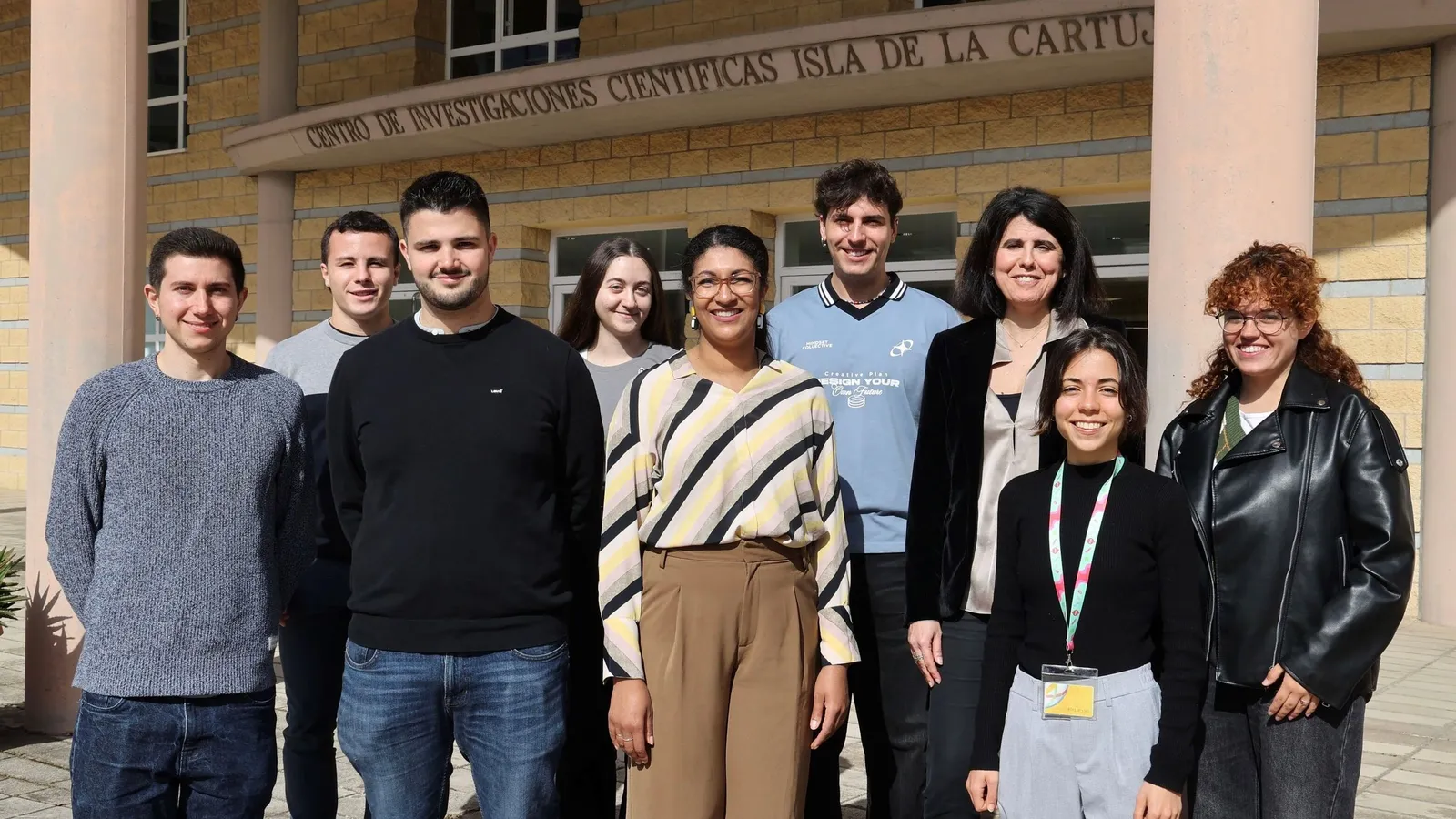
Researchers from the Biointeractomics group | Diario de Sevilla – José Ángel García
A team of researchers, led by Pablo de Olavide University, has identified an unexpected inflammatory mechanism that helps to explain how certain interventions targeting inflammation could have counterproductive effects if they do not take into account the interaction between different pathways of the immune system.
The study, led by Dr Mario D. Cordero and published in the journal *Science Advances* under the title ‘NLRP3 haploinsufficiency unmasks a compensatory NLRP1-NLRP3 interaction that drives accelerated ageing in mice’, demonstrates that a partial reduction in the NLRP3 inflammasome—a therapeutic target of great interest in age-related diseases—can trigger a compensatory response that accelerates ageing in animal models.
The NLRP3 inflammasome is a protein complex that acts as a danger sensor within cells and plays a role in triggering the inflammatory response. Its uncontrolled activity has been linked to chronic inflammatory processes and to cardiovascular, metabolic and neurodegenerative diseases, such as Alzheimer’s. It is therefore considered one of the main targets for the development of anti-inflammatory treatments.
However, the new study shows that partially inhibiting NLRP3 does not always reduce inflammation as one might expect. In haploinsufficiency models — that is, models with a partial reduction in the expression of this protein — the researchers observed that the cells trigger a compensatory response by overexpressing another inflammasome, NLRP1.
La investigación revela que NLRP1 y NLRP3 pueden interactuar directamente y formar un complejo híbrido NLRP1–NLRP3. Esta interacción activa de forma excesiva la respuesta inflamatoria, especialmente a través de moléculas como IL-18, y favorece un estado de inflamación crónica asociada al envejecimiento, conocido como inflammaging.
In the animal models studied, this process resulted in signs of accelerated ageing, including progressive physical deterioration, loss of body mass, metabolic abnormalities, alopecia, kyphosis, corneal opacity and reduced fertility. Internal damage consistent with systemic inflammation was also observed, such as hepatic steatosis and macrophage infiltration in the heart.
“In recent years, the pharmaceutical industry has focused on developing specific NLRP3 inhibitors. Our study aims to rethink strategies for inhibiting inflammasomes from a more integrated perspective; inflammasomes do not act alone, so we should seek more ambitious strategies to avoid future undesirable effects,” says Mario David Cordero.
Simultaneous inhibition of NLRP1 and NLRP3
One of the most significant findings of the study is that the simultaneous inhibition of NLRP1 and NLRP3 was more effective at reducing inflammation and improving parameters associated with ageing in the animals. These results suggest that future anti-inflammatory therapies may require more complex strategies than simply blocking a single molecular target.
The finding has significant implications for translational medicine. Given that NLRP3 is being investigated as a potential therapeutic target in age-related diseases, the authors caution that the long-term effects of its partial inhibition must be carefully assessed, particularly in chronic conditions. In interconnected biological systems, blocking a single pathway can trigger compensatory mechanisms with unintended consequences.
In this vein, the research team is already working on the development of dual-inhibition strategies targeting various inflammasomes. According to the authors, these approaches have so far proved highly effective in preventing complications associated with inflammaging and may improve the safety of future treatments for chronic inflammatory diseases.
The study opens up new avenues of research focused on the study of interactions between inflammasomes, which until now have largely been regarded as independent systems. It also highlights the need to explore in greater depth the role of NLRP1 in age-related diseases, including neurodegenerative, cardiovascular and metabolic conditions.
Taken together, the results point to a more complex view of the inflammatory system and highlight the importance of designing therapies that take into account the plasticity and compensatory capacity between different inflammatory pathways.
Reference:
Inés Muela-Zarzuela et al., NLRP3 haploinsufficiency unmasks a compensatory NLRP1-NLRP3 interaction that drives accelerated aging in mice. Sci. Adv.12, eaec9499(2026). DOI: 10.1126/sciadv.aec9499 .