


Juan M. Benito Hernández
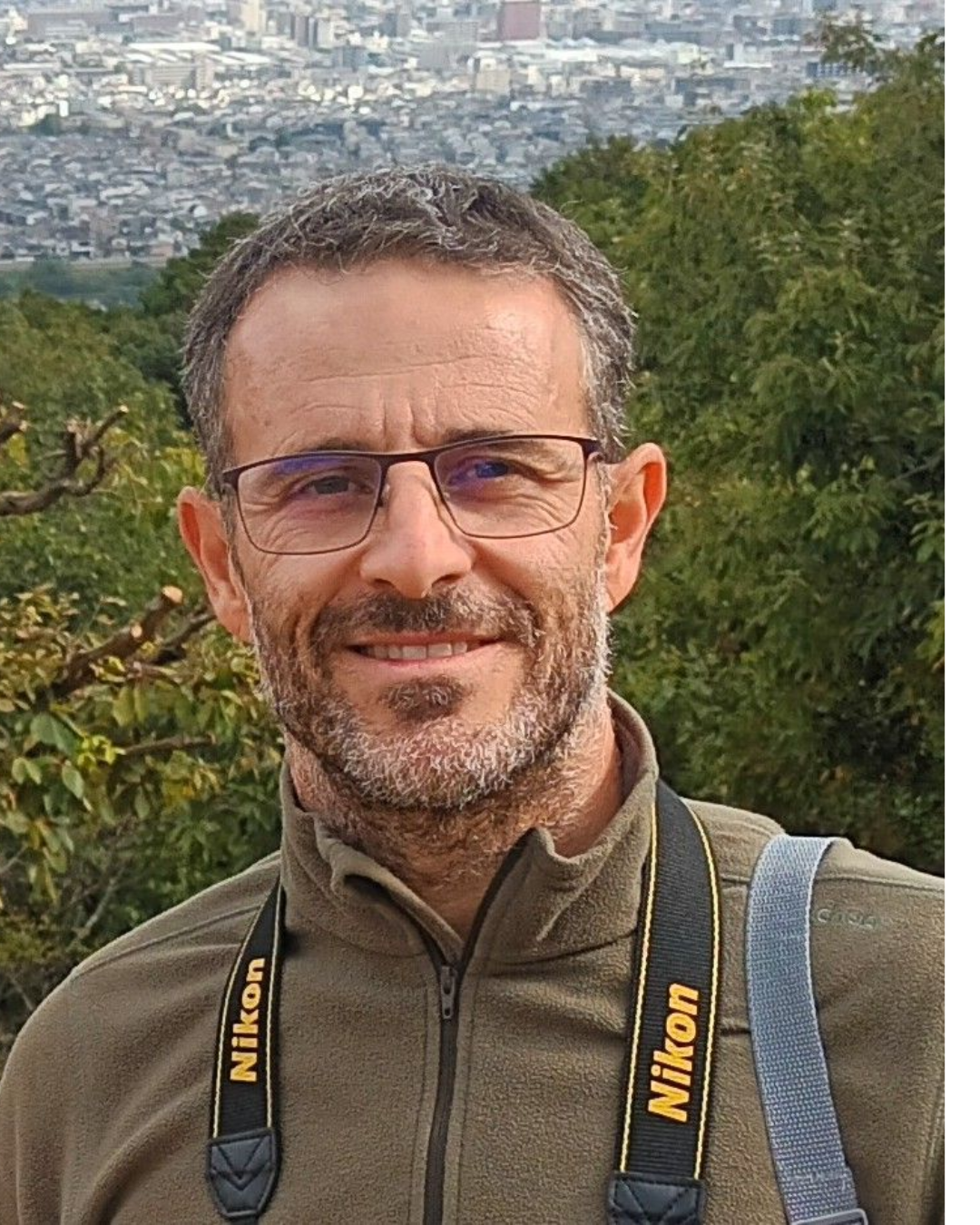
Group: Bioorganic and Supramolecular Chemistry of Carbohydrates
Position: Tenured Scientist
Contact
Tel. ext: 446204
Laboratory: L 209
Office: D 224
Email:
ORCID: 0000-0002-9788-1507
Biography
Juan M. Benito holds a PhD degree in Chemistry (University of Sevilla, 2001). Between 2002 and 2004 he worked at Carlsberg Laboratory (Copenhagen, Denmark), under the supervision of 2022 Chemistry Nobel Prize Prof. Morten Meldal as MSCA Fellow. At the fall of 2004 he enrolled the Institute for Chemical Research (Univ. Sevilla – CSIC) as “Ramón y Cajal” research fellow and, in 2006, he was promoted as Tenured Scientist. In 2007 he was distinguished with the “Premio de Investigador Joven” from the “Real Maestranza de Caballería de Sevilla”.
Research interests
His research is focused at the study of the supramolecular interactions mostly involving carbohydrates, including the implementation tools for the synthesis of molecularly well-defined structures and their biophysical/biochemical and their application into the design of self-assembling biotechnological devices featuring environmental responsive and drug/gene delivery capabilities. He has produced over 90 scientific publications and book chapters, as well as several licenced patents.
Among the most important achievements, it is worth mentioning the design of a new type of therapeutic agent carrier based on molecularly well-defined carbohydrate amphiphiles which functional capabilities can be programmed ad hoc by means chemical synthesis. Such tailoring capabilities have attracted the pharmaceutical industry and, thus, Juan M. Benito has been involved in collaborative academic-industrial consortiums aimed at bringing up a novel nucleic acid delivery platform in the context of mRNA-based vaccines, already producing an extensive intellectual property portfolio.
Selected publications
- Puerto-Madorran et al. Small Sci. 2026, 6, e70377. DOI: 10.1002/smsc.70377
- Z. Wang et al. Commun. Chem. 2026, 9, 118. DOI: 10.1038/s42004-026-01920-z
- G. Rivero-Barbarroja et al. Carbohydr. Polym. 2025, 347, 122776. DOI: 10.1016/j.carbpol.2024.122776
- A. Carbajo-Gordillo et al. Biomacromolecules 2020, 21, 5173. DOI: 10.1021/acs.biomac.0c01283
- A. Carbajo-Gordillo et al. Chem. Commun. 2019, 55, 8227. DOI: 10.1039/c9cc04489b